

How to Fix Root Rot in Houseplants — Save Your Plant Before It’s Too Late
Your plant looked fine last week. Now the leaves are yellowing, stems are soft, and no matter how much or how little you water, nothing seems to help. If this sounds familiar, root rot is almost certainly the problem.
Root rot is one of the most common — and most misdiagnosed — houseplant killers. The frustrating part is that by the time you see symptoms above the soil, the damage below has usually been building for weeks. The good news is that if you catch it early enough, most plants can be saved completely.
This guide walks you through exactly how to identify root rot, treat it step by step, and make sure it never comes back.
Struggling with overall plant health? Explore our Shop Now collection of plant care products — from drainage mixes to root treatments, everything your plant needs to recover.
What Is Root Rot?
Root rot is a condition where plant roots decay due to prolonged exposure to waterlogged, oxygen-deprived soil. It is caused by two things working together — overwatering and soil fungi.
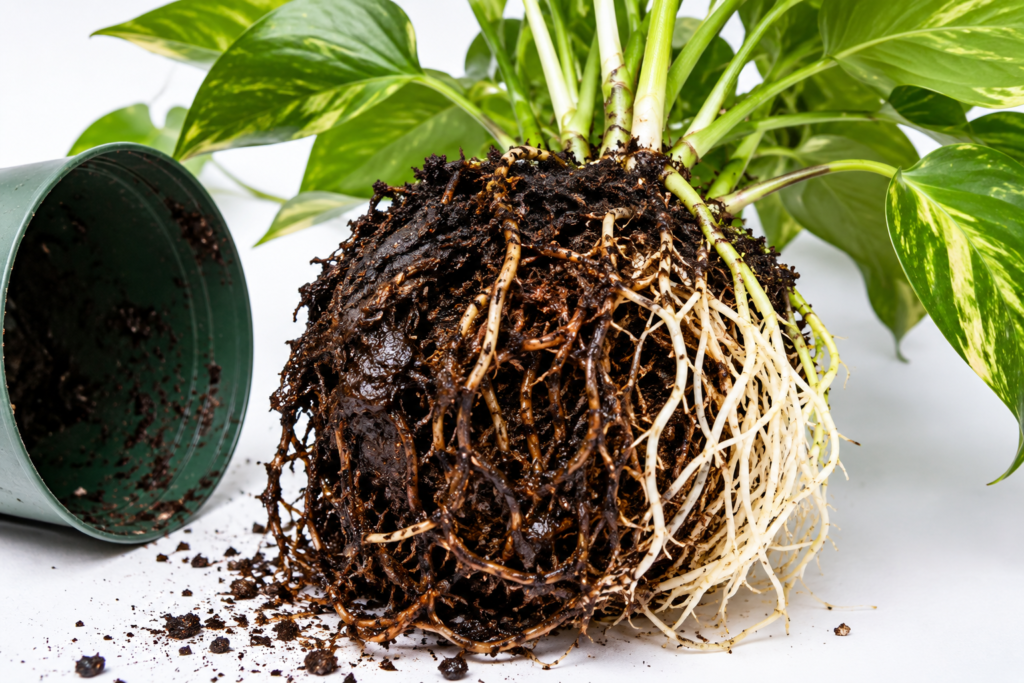
When soil stays wet for too long, oxygen is pushed out of the root zone. Roots begin to suffocate and die. Dead root tissue then becomes the perfect breeding ground for soil-dwelling fungi — most commonly Phytophthora, Pythium, and Rhizoctonia species. These fungi spread rapidly through the root system, turning healthy roots black and mushy.
The destroyed roots can no longer transport water or nutrients upward. The plant starves despite sitting in wet soil — which is why root rot is so confusing. The soil looks moist, you think the plant has enough water, but the plant is actually dying of thirst and hunger at the same time.
If you have already noticed your plant leaves turning yellow and are unsure whether root rot is the cause, read our full guide on why plant leaves turn yellow for a complete diagnosis checklist.
Signs of Root Rot — How to Know For Sure
Root rot is tricky because early symptoms above the soil look identical to several other problems. Here is what to look for at each stage.
Early stage signs: Leaves turning yellow starting from the lower, older growth. Soil that stays wet significantly longer than usual. A faint sour or musty smell coming from the pot. Slight wilting even though the soil is moist.
Mid stage signs: Stems becoming soft or mushy near the base. Leaves drooping and not recovering even after watering. Brown, water-soaked patches appearing on leaves. The plant looking generally sick despite what appears to be normal care.
Advanced stage signs: Stems collapsing at the base. Leaves yellowing and dropping rapidly. A strong rotting smell from the soil. The plant pulling loose from the soil easily because the root system has largely disintegrated.
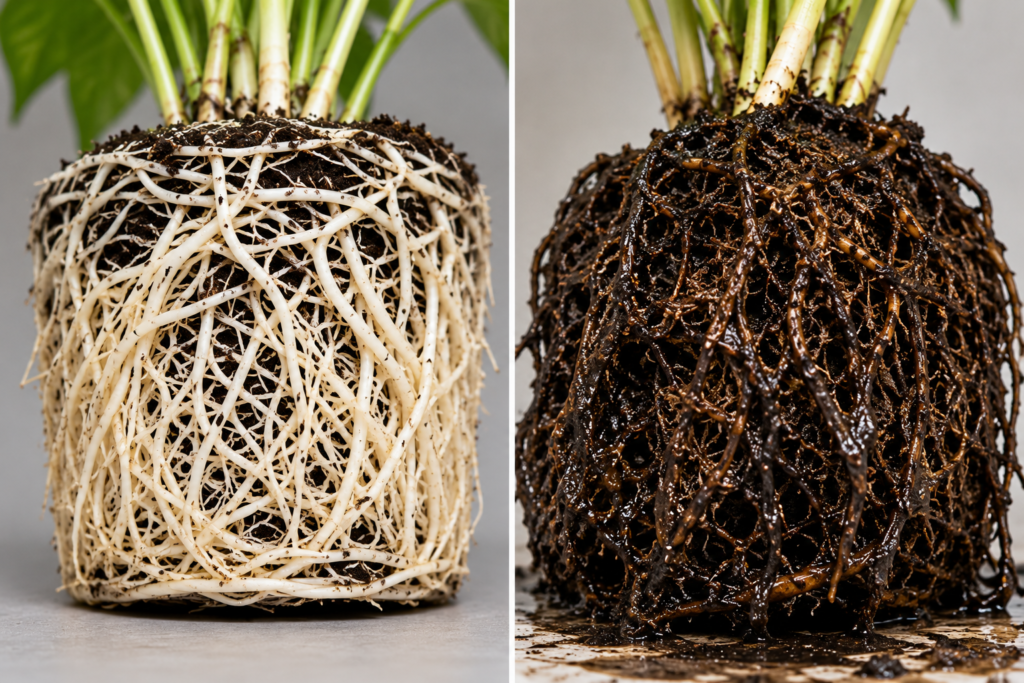
The only way to confirm root rot is to unpot the plant and inspect the roots directly. Healthy roots are white or light tan and firm to the touch. Rotted roots are brown or black, soft, mushy, and may slide off the root when you touch them.
How to Fix Root Rot — Step by Step
Act quickly. The longer root rot spreads, the fewer healthy roots remain to save the plant. Follow these steps in exact order.
Step 1 — Remove the plant from its pot Gently tip the pot on its side and ease the plant out. Do not yank it by the stem. If the plant is stuck, run a clean knife around the inside edge of the pot to loosen it.
Step 2 — Wash the roots Hold the root ball under lukewarm running water and rinse away as much of the old soil as possible. You need to see the roots clearly to assess the damage. Do not skip this step — old infected soil left on the roots will reinfect healthy tissue.
Step 3 — Inspect and assess Look at every root carefully. Healthy roots are white and firm. Rotted roots are brown or black and feel soft or slimy. Count how much of the root system is still healthy. If more than half the roots are rotted, the plant is in serious condition but may still be saveable. If nearly all roots are rotted, survival is unlikely but still worth attempting.
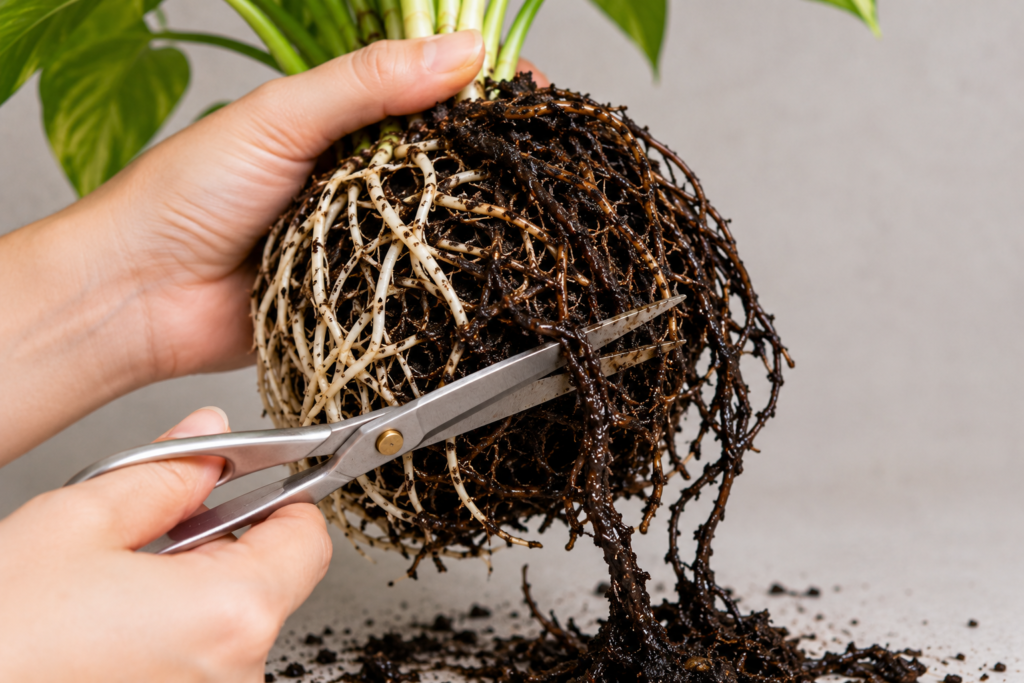
Step 4 — Cut away all rotted roots Use clean, sharp scissors or pruning shears sterilised with rubbing alcohol. Cut away every rotted root, cutting back to healthy tissue. Be thorough — leaving even small sections of rotted root allows the fungus to spread again. After cutting, sterilise your scissors again before moving to the next section.
Step 5 — Treat with fungicide or hydrogen peroxide This step kills remaining fungal spores on the healthy roots. You have two options.
Option A: Soak the trimmed root system in a solution of one part 3% hydrogen peroxide to two parts water for 30 minutes. Hydrogen peroxide kills fungal spores on contact and is safe for plant tissue at this dilution.
Option B: Dust the cut root ends with powdered sulphur or apply a copper-based fungicide according to the product instructions. This is more effective for severe cases.
Step 6 — Repot in fresh soil and a clean pot Never reuse the old soil — it is contaminated with fungal spores. Never reuse the old pot without sterilising it thoroughly with a diluted bleach solution first.
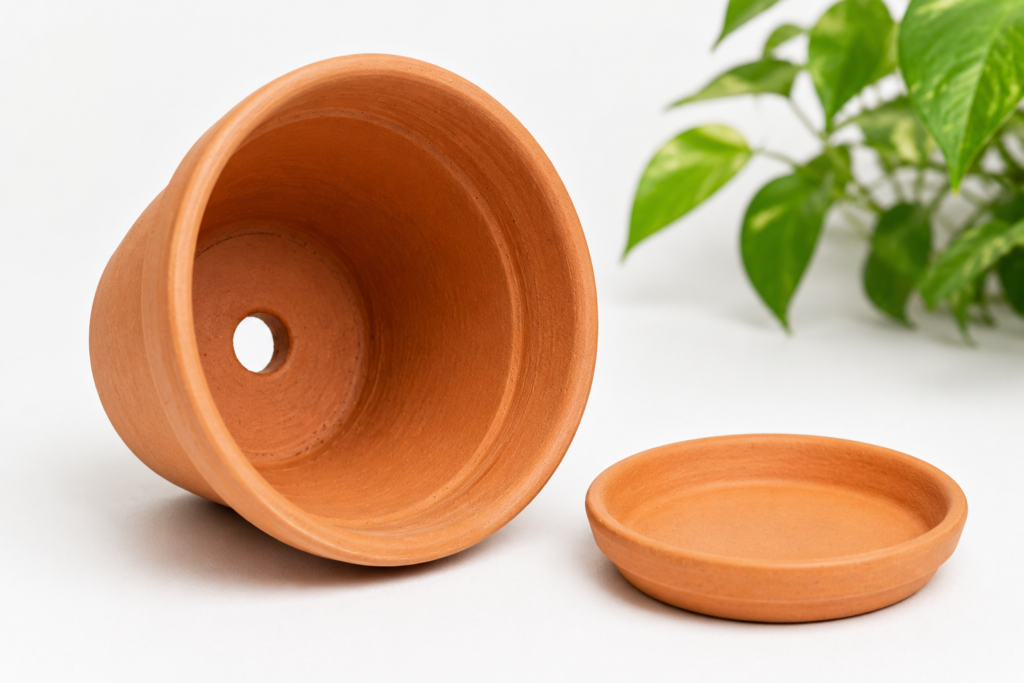
Choose a pot with drainage holes — this is non-negotiable. Choose a pot that is appropriately sized — not too large. Oversized pots hold excess moisture and recreate the waterlogged conditions that caused the problem.
Use a well-draining potting mix. For most tropical houseplants, a mix of standard potting soil with added perlite at a ratio of roughly 70% soil to 30% perlite drains well while retaining enough moisture. For succulents and cacti, use a dedicated cactus mix.
Place the plant in the new pot, fill around the roots with fresh mix, and press gently to eliminate air pockets.
Step 7 — Aftercare Do not water immediately after repotting. Wait two to three days before giving the plant its first light watering. This allows any cuts on the roots to callous over slightly and reduces the risk of reinfection.
Place the plant in bright indirect light — not direct sun. A stressed, recovering plant cannot handle intense light. Avoid fertilising for at least four to six weeks. The damaged root system cannot process nutrients yet and fertiliser will only cause further stress.
How to Prevent Root Rot From Coming Back
Treating root rot once is painful. Treating it twice in the same plant means the care routine needs a serious rethink. Prevention is straightforward once you understand what causes it.
Always use pots with drainage holes. This is the single most important factor. No drainage hole means water has nowhere to go and will always accumulate at the bottom of the pot regardless of how carefully you water.
Water based on soil moisture, not a schedule. Push your finger two inches into the soil before every watering. If it still feels moist, wait. Only water when that layer is dry. Different seasons, temperatures, and light levels all affect how fast soil dries — a fixed watering schedule ignores all of these variables.
Use well-draining soil. Standard potting mixes from garden centres often retain too much moisture for many houseplants. Adding perlite, coarse sand, or orchid bark improves drainage significantly without sacrificing the nutrients the plant needs.
Do not use decorative pots without drainage as permanent homes. Cachepots — decorative outer pots with no drainage — are fine for display as long as the plant sits inside a separate nursery pot with drainage holes. Always check that water is not pooling in the bottom of the cachepot after watering and empty it if it is.
Choose the right pot size. When repotting, go only one to two inches larger in diameter. A pot that is too large holds far more soil than the roots can absorb moisture from, leaving the excess wet for extended periods.
Can a Plant Fully Recover From Root Rot?
Yes — with conditions. Recovery depends on three factors: how much healthy root tissue remains, how quickly you acted, and whether the plant species is naturally resilient.
Plants with more than 50% healthy roots remaining after trimming have a strong chance of full recovery within four to eight weeks. You will typically see new growth emerging as a sign that the root system is re-establishing.
Plants with less than 30% healthy roots remaining are fighting an uphill battle. They may survive but will need several months of careful aftercare and may never fully regain their original size and vigor. Some will not make it despite your best efforts — and that is not a failure of care, it is simply the reality of advanced root rot.
Resilient species like pothos, snake plants, and ZZ plants recover from root rot remarkably well. More sensitive species like fiddle leaf figs, calatheas, and orchids are harder to save once damage is advanced.
Quick Reference — Root Rot at a Glance
Cause → Overwatering combined with poor drainage and soil fungi
Early symptoms → Yellow leaves, soggy soil, faint smell from pot
Confirmed by → Brown or black mushy roots on inspection
Treatment → Remove, rinse, trim rotted roots, treat with hydrogen peroxide, repot in fresh soil
Recovery time → 4 to 8 weeks for mild to moderate cases
Prevention → Drainage holes, moisture-based watering, well-draining soil, correct pot size
Frequently Asked Questions(FAQ)
Can root rot spread to other plants?
Root rot fungi do not typically spread through air contact between plants. The primary risk is cross-contamination through shared tools — scissors, trowels, or pots that touched infected soil and are used on healthy plants without sterilising. Always clean tools with rubbing alcohol between plants, and never reuse infected soil in another pot.
Should I repot immediately when I suspect root rot?
Yes. Do not wait to see if it improves on its own. Root rot does not resolve without intervention — it only gets worse. Every day you wait, the fungus spreads further through the root system and reduces the amount of healthy tissue that can be saved. Act as soon as you suspect it.
Can I use cinnamon to treat root rot?
Cinnamon has mild antifungal properties and is sometimes recommended as a natural treatment. It can be dusted on cut root ends as a supplementary measure. However it is not a replacement for properly trimming all rotted roots and treating with hydrogen peroxide or a proper fungicide. Use it as an addition, not a substitute.
How long does it take for root rot to develop?
In warm conditions with consistently waterlogged soil, root rot can develop within one to two weeks. In cooler conditions it may take longer. This is why catching overwatering early — before roots are affected — is so much easier than treating rot after it sets in.
Can I save a plant if all roots are rotted?
It is very difficult but not always impossible. If the stems and leaves still show signs of life, you can attempt propagation — take a healthy stem cutting, allow it to callous for a day, and root it in fresh water or moist perlite. This essentially starts a new plant from the surviving above-ground tissue. The original root system is lost but the plant genetics survive.
Is root rot the same as overwatering?
Not exactly. Overwatering is the cause, root rot is the consequence. You can overwater a plant briefly without developing root rot if the soil drains well and dries out in time. Root rot develops when overwatering is consistent enough that the soil never gets a chance to dry and fungal activity takes hold. All root rot involves overwatering but not all overwatering leads to root rot.
How do I know my plant is recovering from root rot?
The clearest sign of recovery is new growth — new leaves or shoots emerging from the plant after repotting. This tells you the root system has stabilised enough to support new tissue. You may also notice existing leaves looking slightly firmer and less droopy within two to three weeks. Do not be alarmed if the plant drops a few more leaves in the first week after treatment — this is normal stress response and does not mean the treatment failed.
The Bottom Line
Root rot is serious but it is not a death sentence — if you catch it in time. The moment you notice yellowing leaves combined with consistently wet soil and a smell from the pot, unpot the plant and check the roots. Do not wait. Do not hope it resolves on its own.
Trim aggressively, repot cleanly, water carefully going forward, and most plants will surprise you with how well they recover.
One Response