

How to Start a Kitchen Garden at Home — A Simple Step-by-Step Guide(2026)
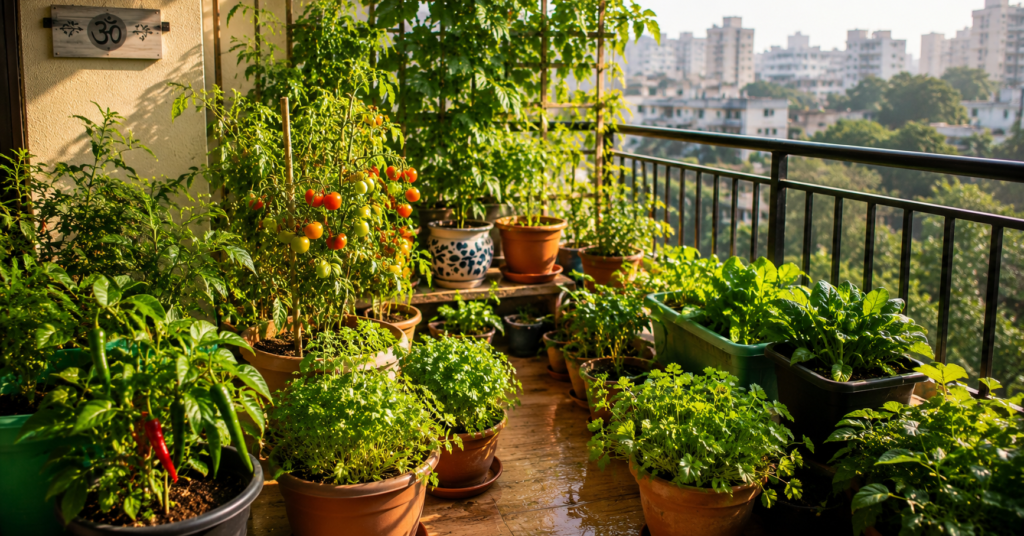
There’s something quietly wonderful about plucking fresh coriander straight from your balcony and dropping it into your dal. No market run. No plastic bag. No wondering how old it is or what was sprayed on it.
A kitchen garden doesn’t need a big space, fancy equipment, or years of experience. If you have a sunny balcony, a terrace, or even a bright windowsill — you have enough. Let’s discuss how to Start a Kitchen Garden at Home.
Step 1 — Find Your Spot to Start a Kitchen Garden at Home
Before anything else, look around your home for a spot that gets 4 to 6 hours of sunlight a day. A south or east-facing balcony is ideal. A terrace is even better.
If you’re in a small flat, don’t be discouraged. A single shelf near a bright window can grow coriander, mint, and methi without any fuss. You’d be surprised how much you can grow in very little space.
Step 2 — Start With What You Actually Cook
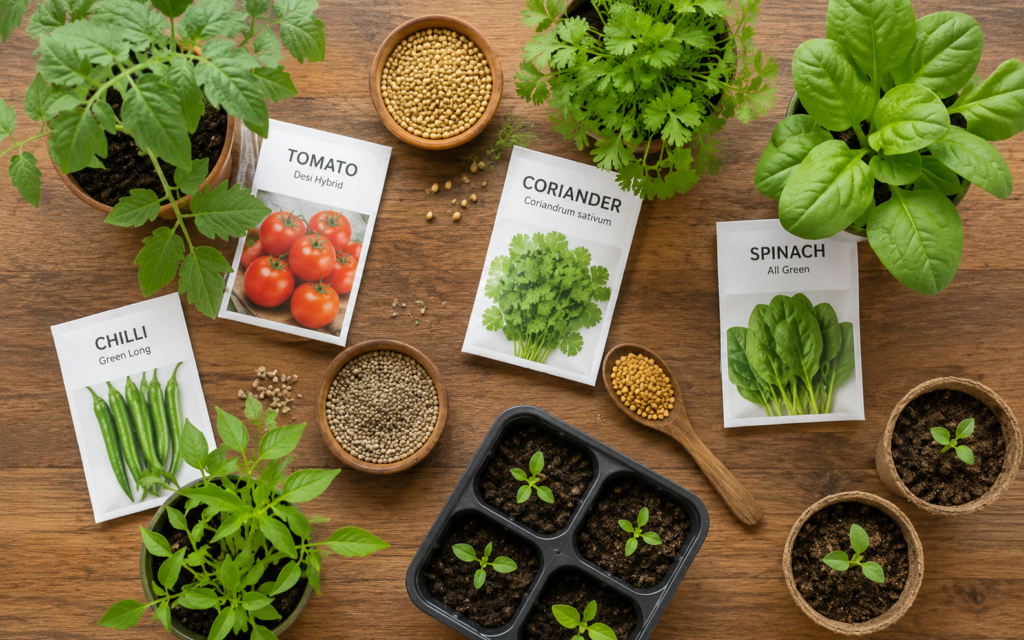
This is the fun part. Don’t go buying 20 types of seeds. Just think about what lands on your plate every day — that’s your starting list.
For most Indian homes, the easiest and most satisfying starting plants are coriander, spinach, methi, green chilli, and mint. Once you get comfortable, you can try tomatoes, brinjal, capsicum, beans, and radish. Fresh tulsi, curry leaves, and basil are wonderful to have too — especially if you cook a lot.
Pick 3 or 4 to start. Keep it simple.
Step 3 — Your Containers Don’t Have to Be Fancy
Old plastic containers, buckets, crates, grow bags — all of them work perfectly fine. The only thing that matters is that whatever you use has holes at the bottom for drainage.
As a rough guide: herbs like coriander and mint are happy in a 6-inch pot. Vegetables like tomatoes and brinjal prefer something 12 inches or deeper, so the roots have room to spread.
Step 4 — Get the Soil Right (This One Really Matters)
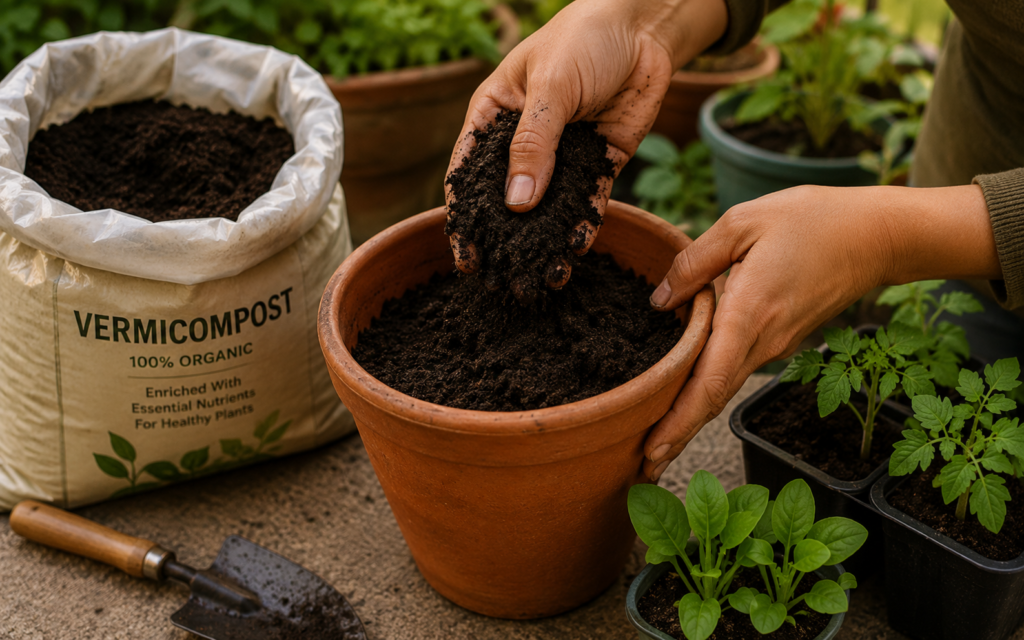
Most beginners fill their pots with garden soil, and then can’t figure out why nothing is growing. The problem is that regular soil becomes hard and compact in a pot. It doesn’t drain well, and the roots struggle.
What works much better is a good potting mix — something light, airy, and full of organic matter.
Our Vegetable Mix at OC Farms is made specifically for kitchen gardens. It’s a soilless mix with 13 ingredients — cocopeat, perlite, and organic matter among them — that drains well, holds just enough moisture, and gives your vegetables a strong start.
Mix in some Vermicompost too. Vermicompost is basically the best thing you can add to any pot — it feeds the soil slowly, brings in beneficial microorganisms, and makes everything healthier over time. It’s completely natural, has no smell when used correctly, and is safe around kids and pets. Think of it as a long-term gift to your soil.
Good soil is the foundation. Everything else follows from it.
Step 5 — Sow Seeds or Get Seedlings
You have two options: start from seeds or buy ready seedlings from a nursery.
Seeds are cheaper and more satisfying, but take longer. Seedlings are faster and easier for beginners.
For seeds, fill your pot with the potting mix, make a small 1 cm deep hole, drop 2–3 seeds in, and cover lightly. Water gently. Most seeds germinate in 5–10 days if the soil stays moist and the spot gets warmth and light.
For seedlings, just make sure you handle the roots gently while transplanting, water them immediately after, and keep them in partial shade for the first 2–3 days while they adjust.
Step 6 — Water the Right Way
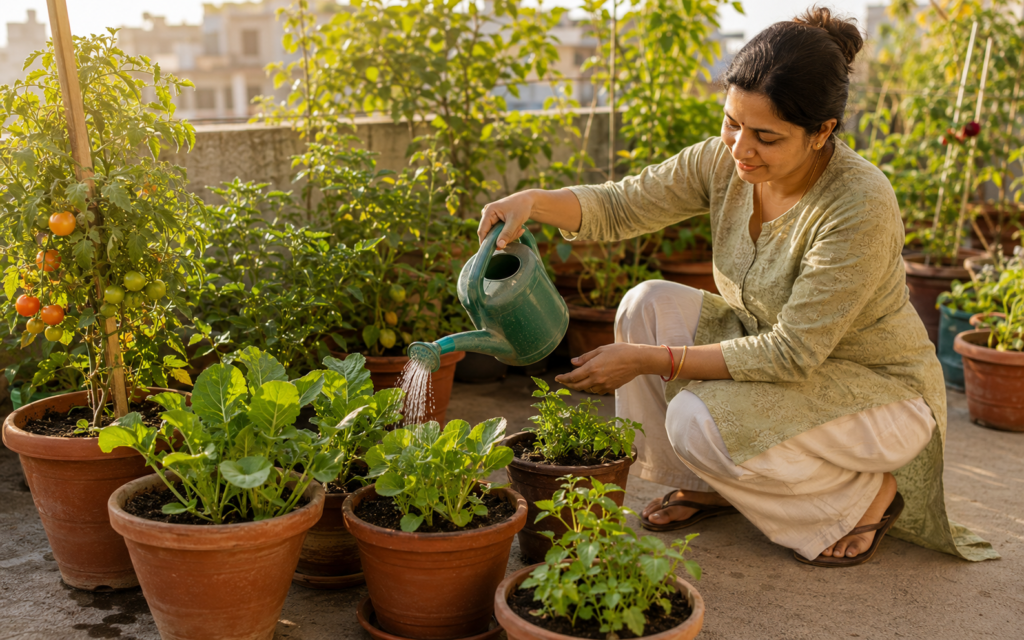
More kitchen gardens die from overwatering than underwatering. The trick is simple — water when the top inch of soil feels dry. Push your finger about an inch into the soil. Dry? Water. Still moist? Wait.
Water in the morning if possible — it’s gentler on the plants and reduces fungal issues. Avoid wetting the leaves too much. Water at the base of the plant.
In Delhi’s summers, your plants might need watering every day. In cooler months, every 2–3 days is usually enough.
Step 7 — Feed Your Plants Regularly
Once your plants start growing, they’ll need nutrients — especially if you’re growing in pots, where the soil gets depleted over time.
Organic feeding is the way to go for a kitchen garden, since you’ll be eating what you grow.
A few things that work beautifully:
Vermicompost — mix a small handful into the top layer of soil every 3–4 weeks. It’s gentle, slow-release, and completely natural.
Seaweed Liquid — our OC Farms Seaweed Liquid is a fantastic natural growth booster. A diluted spray or soil drench once every 2 weeks gives plants a dose of micronutrients and natural hormones that show visible results in leaf growth and flowering.
Bio-Booster — our microbial + amino acid formula that helps roots absorb nutrients better. Especially good when plants are in their early growth phase.
Neem Cake Powder (Khali) — mix into the soil once a month. It slowly releases nitrogen while also keeping soil-borne pests at bay. Two benefits in one.
None of these are harsh chemicals. They’re all 100% organic and completely safe for a kitchen garden where you’re growing food.
Step 8 — Keep Pests Away Naturally
At some point, you’ll notice tiny holes in leaves, sticky residue, or white cottony clusters on stems. Don’t panic — this is completely normal, especially in the monsoon season.
The key is early action with gentle, natural solutions.
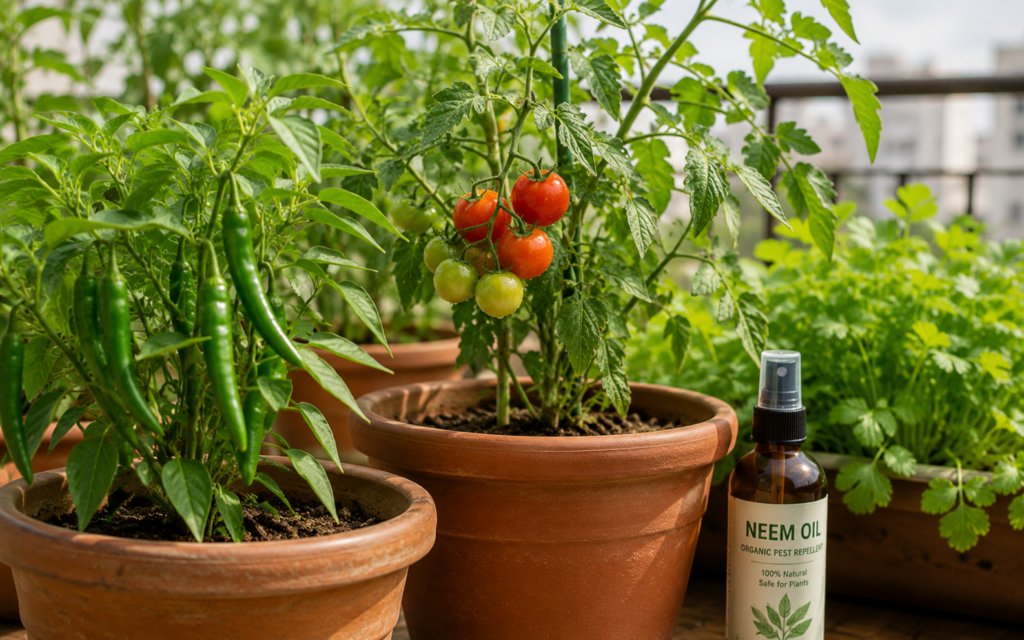
Neem Oil is your best friend here. A diluted spray (a few drops of neem oil + a drop of dish soap + water) applied to the plant once a week is incredibly effective against most common pests like aphids, whitefly, and spider mites.
For mealybugs specifically — those white fluffy pests — our Mealy Bug Killer spray works fast and is completely safe for edible plants when used as directed.
Avoid chemical pesticides on kitchen garden plants. You don’t want that in your food.
Step 9 — Observe, Adjust, Enjoy
A kitchen garden is a living thing. Some weeks you’ll have lush, happy growth. Some weeks a plant won’t make it. Both are normal, and both teach you something.
The more time you spend just watching your plants — checking under leaves, noticing colour changes, seeing how they respond after you feed them — the better you get at this. Take a photo every week. In a month, you’ll be genuinely surprised by how much things have moved.
And when you finally get that first harvest — even if it’s just a small bunch of coriander — that feeling is really something else.
Want a Head Start? Try Our Kitchen Garden Kit
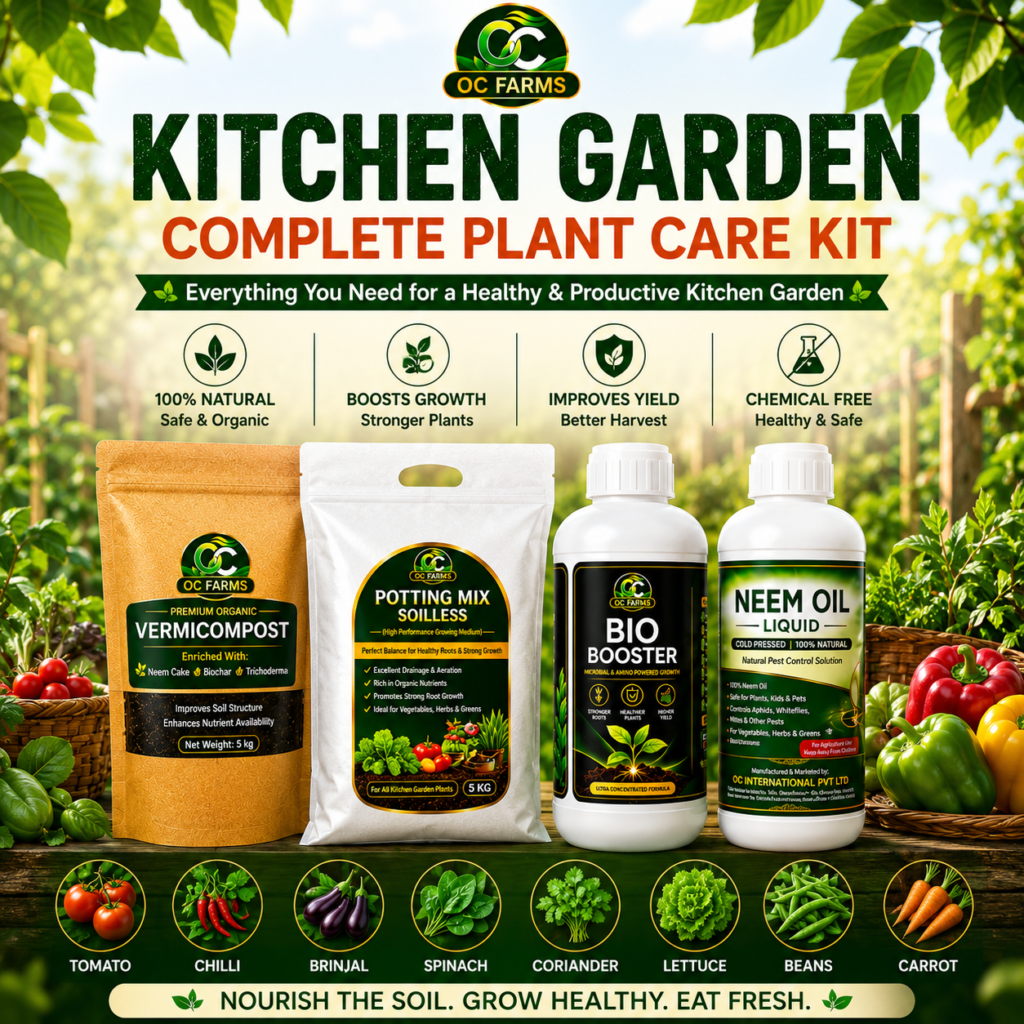
If you’d rather not figure out what to buy separately, our Kitchen Garden Kit brings together the Vegetable Mix, Vermicompost, Neem Cake Powder, and Bio-Booster in one go. It’s currently available at ₹799 and is one of our most popular kits for home gardeners.
A Little Something Research Says
If you needed one more reason to get started — a 2025 study published in Frontiers in Public Health, conducted across households in India, found that families with a kitchen garden had significantly better dietary diversity. 66% of those families were sourcing most of their daily vegetables directly from their own garden. And a 2024 review of 40 gardening studies confirmed what most gardeners already feel — that spending time growing things consistently improves both mental and physical health.
It’s not just a hobby. It’s genuinely good for you.
Final Thought
You don’t need a farm. You don’t need to know everything before you begin. You just need a pot, some good soil, sunlight, and a little consistency.
Start small. Start with what you cook. And let it grow from there.
If you have questions, we’re always around at ocinternational.in or drop us a message on WhatsApp.
Happy growing. 🌱
Frequently Asked Questions About Kitchen Gardening
-
I live in a small flat in Delhi. Can I still start a kitchen garden?
Absolutely. A sunny balcony or even a bright windowsill is enough to get started. Coriander, mint, methi, spinach, and green chilli all grow happily in small pots. You don’t need a garden or even a terrace — just decent sunlight and the right soil.
-
Which vegetables are easiest to grow for a complete beginner?
Start with coriander, spinach, methi, and green chilli. These are fast-growing, hard to kill, and things you’ll actually use in your kitchen every day. Once you’re comfortable, move on to tomatoes, capsicum, and brinjal.
-
How much sunlight does a kitchen garden actually need?
Most vegetables need 4 to 6 hours of direct sunlight daily. Leafy greens like spinach and coriander can manage with a little less — around 3 to 4 hours. If your balcony gets good morning sun, you’re in a good spot.
-
Can I use regular garden soil in my pots?
It’s not ideal. Garden soil becomes compact and hard inside pots, which suffocates the roots and doesn’t drain well. A good quality potting mix — like our Vegetable Mix — is lighter, better draining, and gives your plants a much better chance.
-
How often should I water my kitchen garden?
The simple rule — push your finger an inch into the soil. If it’s dry, water. If it still feels moist, wait. In Delhi summers, that usually means watering daily. In winter, every 2 to 3 days is enough. Overwatering is actually the most common mistake beginners make.
-
Do I need to use fertiliser? My plants look okay without it.
If your plants are in pots, yes — eventually they’ll need feeding. Pot soil has limited nutrients and they get used up over time. You don’t need anything chemical though. A handful of Vermicompost worked into the top soil every 3 to 4 weeks, or a fortnightly spray of Seaweed Liquid, is enough to keep things growing well.
-
I’m seeing white cottony stuff on my plant stems. What is that?
That’s mealybug — very common, especially in humid weather. Don’t panic. Our Mealy Bug Killer spray handles it quickly and is completely safe for edible plants. Catching it early makes a big difference, so check your plants regularly.
-
Should I start from seeds or buy seedlings from a nursery?
Both work fine. Seeds are cheaper and more satisfying — you watch the whole journey from the beginning. Seedlings are faster and a bit more forgiving for first-timers. If you’ve never gardened before, starting with nursery seedlings for your first round builds confidence quickly.
-
What’s the best time of year to start a kitchen garden in India?
October to February is honestly the best time — the weather is cool, plants are less stressed, and pests are fewer. That said, you can start a kitchen garden any time of year. Summers need more watering and pest attention, monsoon season needs good drainage, but neither stops you from growing.
-
Is the OC Farms Kitchen Garden Kit enough to get started, or do I need to buy other things separately?
The Kitchen Garden Kit gives you the four core things — potting mix, vermicompost, neem cake powder, and bio-booster. You’ll still need to pick up pots or grow bags and seeds or seedlings from a local nursery. But everything you need to actually feed and nurture the plants is covered in the kit.
-
What is the importance of a kitchen garden?
A kitchen garden gives you fresh, chemical-free vegetables at home, reduces dependence on market produce, and saves money over time. For Indian households, growing coriander, mint, spinach, and methi at home ensures you always have fresh herbs without a market run. Studies also show kitchen gardening consistently improves dietary diversity and mental wellbeing.