

Why Are My Plant Leaves Turning Yellow? 7 Reasons (And How to Fix Them)
You water your plants faithfully, give them light, maybe even talk to them — and still, those leaves start fading from healthy green to a dull, worrying yellow. You’re not alone. Yellowing leaves, scientifically called chlorosis, is the single most common complaint among houseplant owners, and the frustrating truth is that over half a dozen different problems all look nearly identical.
The good news is that most causes are completely reversible — if you catch them early and diagnose correctly.
This guide covers the 7 most common reasons your plant leaves are turning yellow, how to tell them apart, and exactly what to do to fix each one.
Struggling with unhealthy plants? Explore our Shop Now collection of plant care products — from fertilizers to pest control, everything your plants need to thrive.
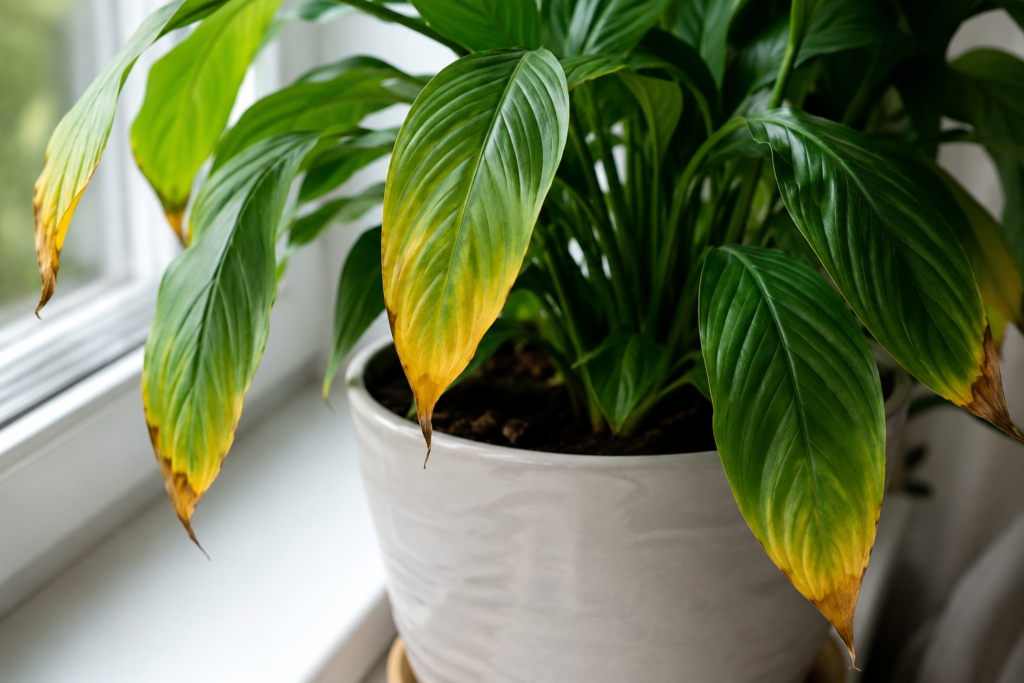
What Causes Yellow Leaves on Plants?
Before diving into each cause, here’s the most important thing to understand: a yellow leaf is a symptom, not a diagnosis. The same visual result — yellowing — can come from too much water or too little, too many nutrients or not enough. Jumping to a fix without diagnosing correctly often makes things worse.
Work through the causes below in order. Watering issues account for the majority of cases, so start there.
1. Overwatering — The #1 Cause of Yellow Leaves
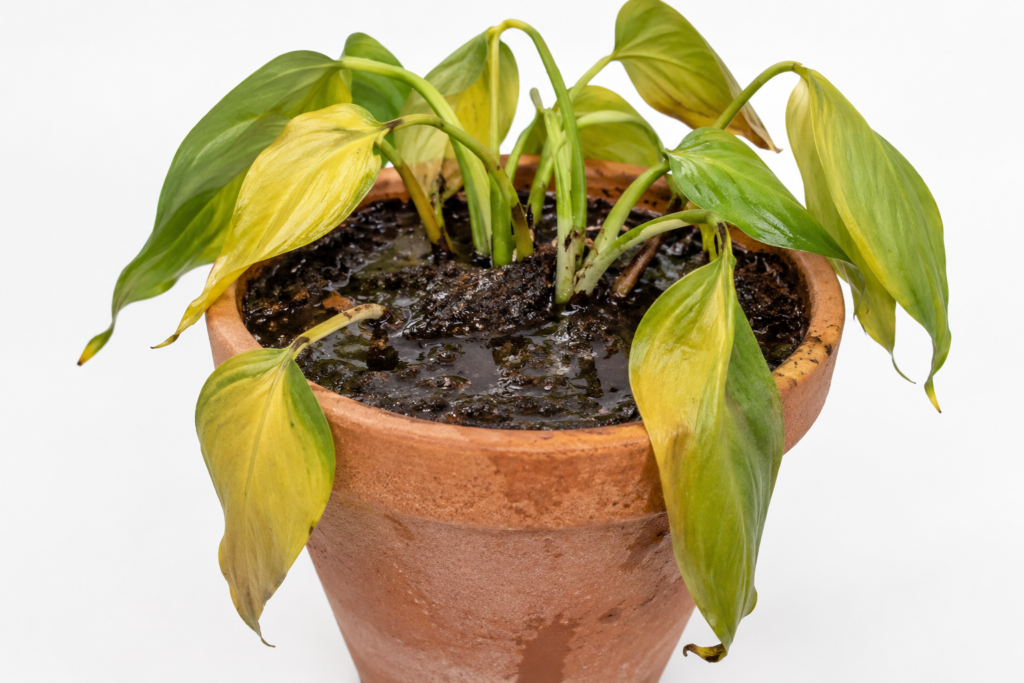
If you had to bet on one cause, bet on this one. Overwatering is responsible for more yellow houseplant leaves than any other factor, and it’s consistently misunderstood. The plant isn’t drowning — it’s suffocating.
When soil stays waterlogged for extended periods, oxygen is pushed out of the root zone. Without oxygen,roots begin to deteriorate and rot. Rotting roots cannot transport water or nutrients up through the plant. The leaves starve for resources and turn yellow.
How to identify overwatering: Leaves turn yellow and feel soft or mushy to the touch, not dry or crispy. The soil is consistently wet, not just damp. You may notice a sour or rotting smell from the pot. Lower, older leaves typically yellow first before spreading upward. In severe cases, you’ll see brown, mushy stems at the base.
How to fix it: Stop watering immediately and let the soil dry out completely. Check that your pot has drainage holes — a pot without drainage is the fastest path to root rot. If you suspect root rot has already set in, unpot the plant, inspect the roots, and trim any black or mushy sections with clean, sterile scissors. Repot in fresh, well-draining potting mix.
Going forward, water based on soil moisture, not a fixed schedule. Push your finger two inches into the soil — if it still feels moist, wait. Only water when that layer is dry.
2. Underwatering — The Opposite Problem With Similar Symptoms
Underwatering causes yellowing for the exact opposite reason, but the leaves give themselves away if you know what to feel for. A drought-stressed plant begins shedding leaves to conserve the water it has left. Those leaves yellow and drop.
How to identify underwatering: Leaves turn yellow but feel dry, papery, or crispy — not soft. The soil is bone dry and may have pulled away from the edges of the pot. Leaves often curl inward before yellowing. The pot feels noticeably lighter than usual when lifted.
How to fix it: Water deeply until water runs freely from the drainage holes. Don’t just wet the surface. For severely dehydrated soil that has become hydrophobic (water runs straight through without absorbing), try bottom watering: set the pot in a shallow tray of water for 20 to 30 minutes and let the soil slowly rehydrate from below.
Then establish a consistent watering habit. Most tropical houseplants need watering when the top one to two inches of soil are dry. Succulents and cacti need far less — wait until the soil is dry all the way through.
3. Nutrient Deficiency — Your Plant Is Starving
Plants need nutrients to synthesize chlorophyll, the pigment that makes leaves green. When specific nutrients are lacking, chlorophyll production drops and leaves turn yellow. The tricky part is that different nutrient deficiencies produce different yellowing patterns, and reading those patterns is your best diagnostic tool.
Nitrogen deficiency is the most common. Nitrogen is a mobile nutrient, meaning the plant pulls it from older growth to supply new growth. Yellowing starts on the lower, older leaves and moves upward. The yellowing is uniform — the whole leaf turns pale yellow-green, not patchy.
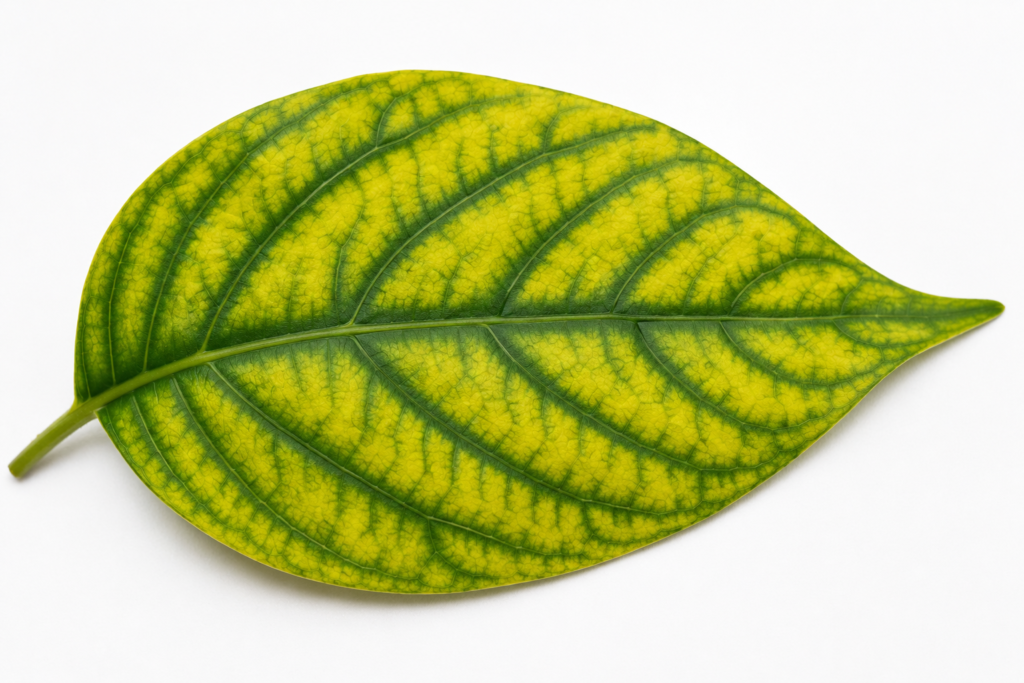
Iron deficiency produces a distinctive pattern called interveinal chlorosis. The leaf tissue between the veins turns yellow while the veins themselves stay green. This tends to affect new growth first, since iron is not mobile in plants.
Magnesium deficiency looks similar to iron deficiency — interveinal yellowing — but affects older leaves first, not new ones. Magnesium is mobile, so the plant drains it from old leaves to feed new ones.
Potassium deficiency shows up as yellowing and browning along the edges and tips of older leaves, sometimes called leaf scorch.
How to fix it: During the growing season (spring through summer), feed with a balanced liquid fertilizer. For iron deficiency specifically, use a chelated iron supplement — chelated iron stays available to roots across a wider pH range than standard iron compounds.
One important fact that surprises many gardeners: nutrient deficiency in houseplants is often not caused by an absent nutrient, but by soil pH being out of range, which locks nutrients out even when they’re physically present in the soil. Most houseplants thrive in a soil pH between 6.0 and 7.0. Outside that window, nutrients become chemically unavailable no matter how much you fertilize.
Do not fertilize in winter. Most houseplants are dormant or in slow growth, cannot process fertilizer, and excess mineral salts will accumulate in the soil and damage roots.
4. Incorrect Light — Too Little or Too Much
Light is the energy source that drives photosynthesis. Without adequate light, a plant cannot produce chlorophyll efficiently, and leaves lose their green color. But excessive direct sunlight causes a different kind of yellowing — photooxidative bleaching — where intense UV radiation destroys chlorophyll faster than the plant can produce it.
Both extremes cause yellow leaves. The pattern tells you which direction you’re in.
Too little light: Leaves turn a pale, washed-out yellow overall, particularly on the side of the plant facing away from the light source. New growth comes in small and weak. Lower leaves yellow and drop as the plant conserves energy. The plant may lean aggressively toward the window.
Too much direct sun: Yellowing appears as bleached or white-yellow patches, usually on the upper surface of leaves facing the light. Edges may look scorched or turn brown and papery. The damage is localized to the exposed areas, not uniform across the whole leaf.
How to fix it: For low-light plants, move them closer to a bright window with indirect light. East-facing windows are ideal for most tropical houseplants — bright morning sun, gentler afternoon light. For sun-scorched plants, move them back from intense south or west-facing windows, or diffuse the light with a sheer curtain.
Know your specific plant’s needs. A snake plant tolerates low light well. A fiddle leaf fig needs consistent bright indirect light. A succulent genuinely needs several hours of direct sun. There is no universal answer.
5. Temperature Stress and Cold Drafts
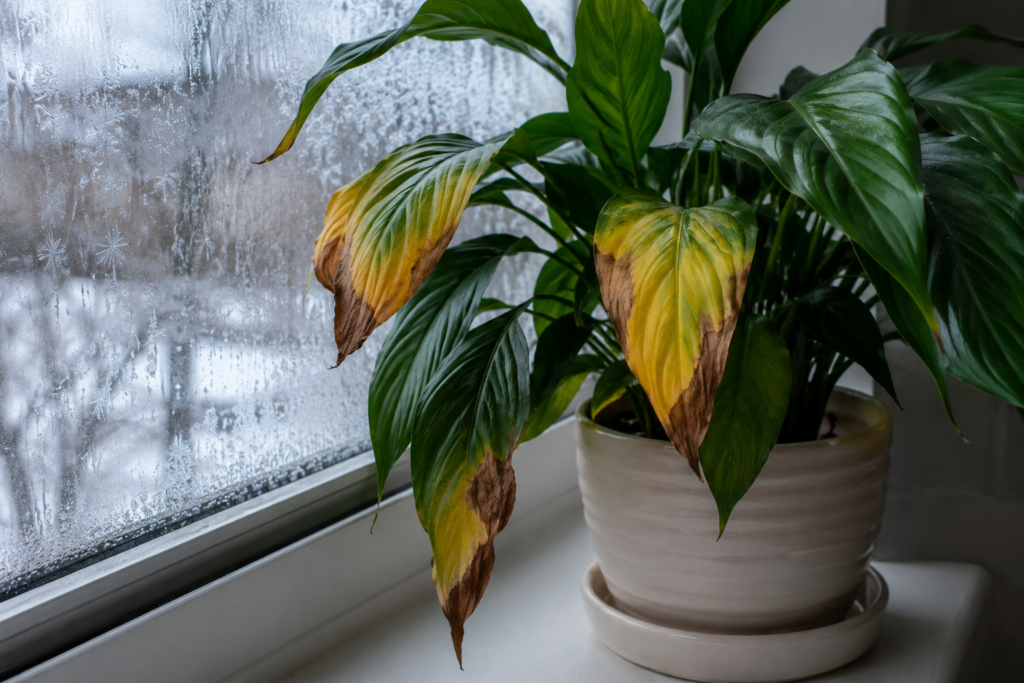
Plants, especially tropical houseplants, are highly sensitive to temperature swings. A sudden cold draft from an air conditioning vent, a heating unit blasting dry hot air, or a plant pressed against a cold single-pane window in winter can all trigger leaf yellowing within days.
How to identify temperature stress: Yellowing began after a season change, after you moved the plant, or after you turned on heating or cooling. Leaves on one side of the plant — the side facing a vent or cold window — yellow more than the other side. Leaves may drop suddenly without much warning.
How to fix it: Keep most tropical houseplants in temperatures between 60°F and 80°F (15°C to 27°C). Avoid placing plants directly in front of heating vents, air conditioners, or drafty exterior windows. In winter, even touching a cold window pane can damage the leaves of cold-sensitive plants like pothos, calatheas, and peace lilies — give them a few inches of clearance.
6. Root Bound — When the Pot Is Too Small
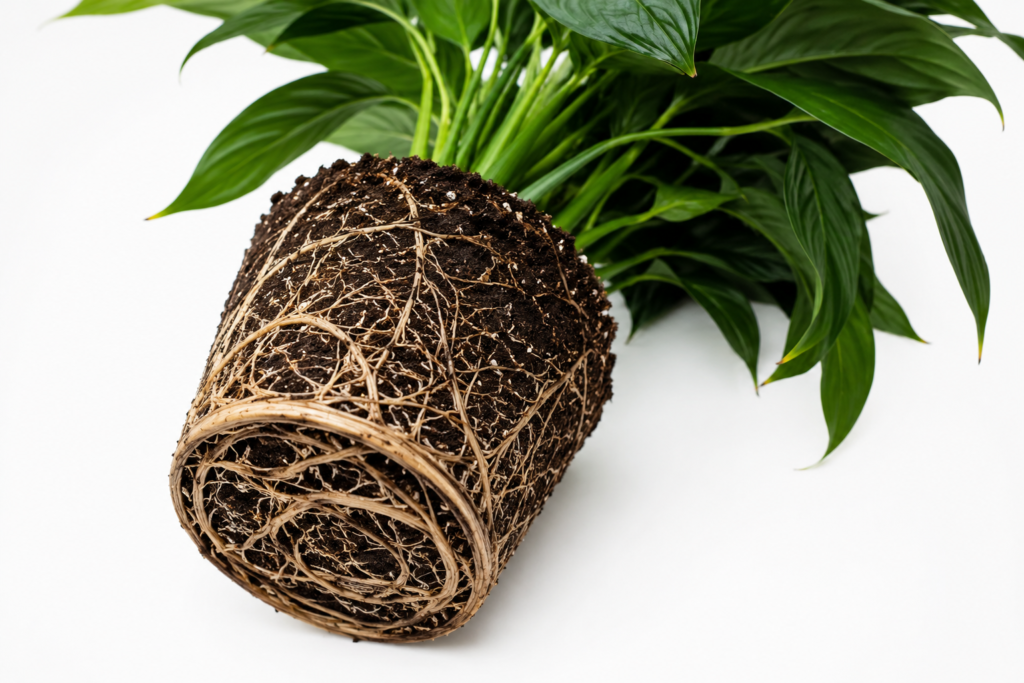
As a plant grows, its root system expands. When roots run out of room, they begin circling the bottom of the pot, compacting tightly against each other. This dense mat of roots struggles to absorb water and nutrients efficiently, creating a stressed, resource-starved plant — which shows up as yellowing leaves despite what looks like good care.
How to identify a root-bound plant: Roots are visibly growing out of the drainage holes at the bottom. When you water, water runs straight through without being retained. The plant looks proportionally too large for its container. You may see roots pressing against the sides of a transparent pot. Despite consistent watering and feeding, leaves continue to yellow.
How to fix it: Repot into a container that is one to two inches larger in diameter than the current pot — no more. A pot that is too large retains excess moisture around the roots and increases the risk of root rot. Use fresh, species-appropriate potting mix and gently loosen the compacted root ball before placing it in the new container.
Most houseplants benefit from repotting every one to two years in spring, at the start of the growing season.
7. Pests — The Invisible Attackers
Insect infestations are often the last thing gardeners check, partly because the bugs themselves are tiny and partly because the leaf damage looks similar to other problems. But several common houseplant pests directly cause yellowing by piercing leaf tissue and feeding on plant sap, disrupting the flow of water and nutrients.
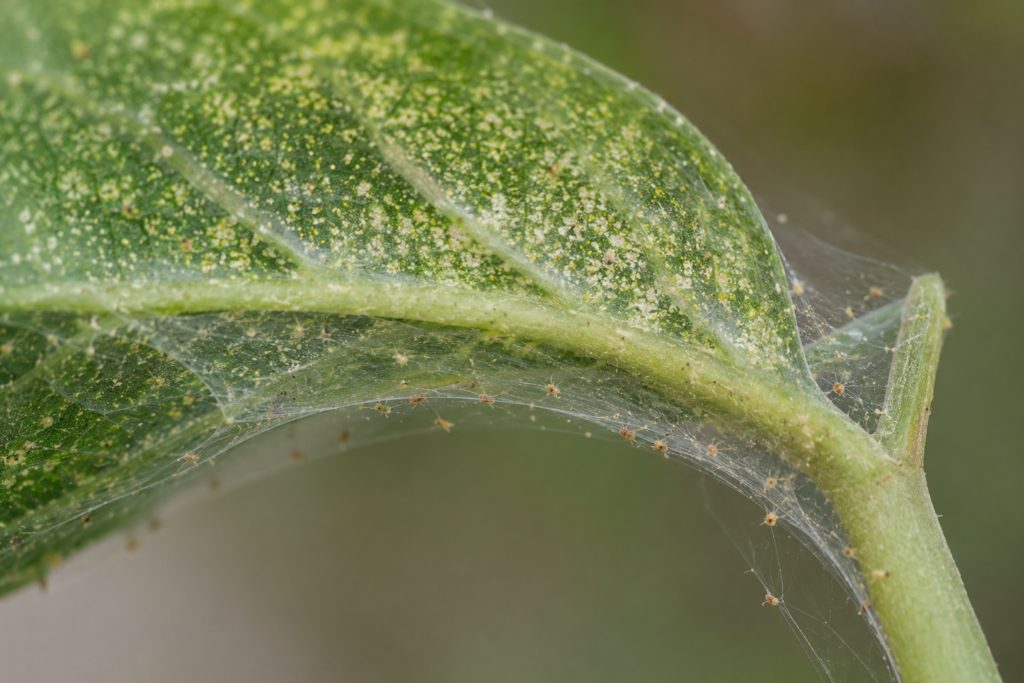
Spider mites are the most common offender. They are barely visible to the naked eye but leave a signature trail: tiny yellow or white stippled dots scattered across the leaf surface, and fine webbing on the undersides of leaves or between stems. They thrive in hot, dry indoor conditions.
Aphids cluster on new growth and soft stems, sucking sap and secreting a sticky substance called honeydew. Leaves yellow, curl, and distort. You may notice ants, which farm aphids for their honeydew.
Mealybugs appear as white cottony clusters in leaf joints and on stems. They weaken the plant steadily over time.
Fungus gnats — the small flies that hover around your soil — cause yellowing not as adults but as larvae. The larvae live in moist soil and feed on fine root hairs, damaging the plant’s ability to absorb water and nutrients.
Scale insects look like small brown bumps attached to stems and leaf undersides. They feed on plant sap continuously and can severely weaken a plant if undetected.
How to fix it: Make it a monthly habit to inspect the undersides of leaves with a magnifying glass — that’s where most pests hide. Treat spider mites and aphids with neem oil or insecticidal soap spray, applied thoroughly to all leaf surfaces. Use rubbing alcohol on a cotton swab for mealybugs and scale. For fungus gnats, allow the top two inches of soil to dry completely between waterings to eliminate the moist environment larvae need. Isolate any infected plant immediately to prevent spread to nearby plants.
Quick Diagnosis Cheat Sheet
| Symptom | Most Likely Cause |
|---|---|
| Uniform yellow, lower leaves first | Overwatering or nitrogen deficiency |
| Yellow + dry, crispy feel | Underwatering |
| Yellow between veins, veins stay green | Iron or magnesium deficiency |
| Bleached yellow patches on top of leaf | Too much direct sunlight |
| Pale yellow overall, leggy growth | Too little light |
| Sudden yellowing after moving plant | Temperature stress |
| Yellowing + sticky residue or webbing | Pest infestation |
One Rule That Prevents Most Yellow Leaf Problems
Before changing anything — water, fertilizer, location — change only one variable at a time and observe for seven to ten days. Most new plant owners panic when they see yellow leaves, immediately repot, change location, flush the soil, and start a new fertilizer routine all at once. When the plant recovers (or doesn’t), they have no idea what actually worked. Systematic, single-variable adjustments are how you actually learn your plant’s needs.
FAQ — People Also Ask
Q1: Should I cut off yellow leaves?
Yes, in most cases. Yellow leaves will not recover their green color — once chlorophyll is lost, it doesn’t return to that leaf. Removing yellow leaves keeps the plant looking healthy, prevents potential fungal issues, and redirects the plant’s energy toward new, healthy growth. Use clean, sterile scissors or pruning shears.
Q2: Can yellow leaves turn green again?
Rarely, and only in specific cases. If the yellowing was caused by temporary nitrogen deficiency and you correct the feeding quickly, some leaves may partially regain color. However, in most scenarios — overwatering damage, light stress, pest damage — the yellow leaf is done. Remove it and focus on preventing new yellowing.
Q3: Why are the bottom leaves of my plant turning yellow?
Lower, older leaves yellowing is often completely natural — plants shed their oldest leaves as they grow. However, if it’s happening rapidly or spreading upward, it’s more likely overwatering or a nitrogen deficiency, both of which affect older leaves first.
Q4: Why are my outdoor plant leaves turning yellow?
Outdoor plants face the same core issues — watering problems, nutrient deficiencies, and pests — but also contend with seasonal changes. In autumn, many plants naturally yellow as they enter dormancy. In summer, yellowing can result from heat stress or soil drying out too fast. Always check soil moisture and inspect for pests first.
Q5: How do I prevent yellow leaves on plants?
The best prevention is a consistent care routine: water based on soil moisture (not schedule), fertilize during active growth, provide species-appropriate light, inspect for pests monthly, and repot when roots become crowded. Most yellowing is a symptom of preventable stress.
Q6: Can too much fertilizer cause yellow leaves?
Absolutely yes — this is called fertilizer burn or salt toxicity. Over-fertilizing builds up mineral salts in the soil that damage roots and prevent water absorption. Signs include yellow leaf tips and margins, crusty white deposits on the soil surface. Flush the soil thoroughly with plain water to dilute salt buildup, and hold off fertilizing for at least 4–6 weeks.
Q7: Do all plants yellow for the same reasons?
The causes are universal, but the sensitivity varies significantly by species. Succulents yellow almost exclusively from overwatering. Tropical plants like pothos and monstera yellow quickly from cold drafts. Citrus trees are notorious for iron chlorosis. Always research your specific plant’s preferences — a one-size-fits-all approach leads to misdiagnosis.
Q8: Does overwatering cause yellow leaves?
Yes — overwatering is the most common cause of yellow leaves. When roots sit in waterlogged soil, they cannot absorb oxygen and begin to die, cutting off nutrient supply to the leaves. The fix is to let the soil dry out completely before watering again.
Q9: How do I fix yellow leaves on a tomato plant?
Yellow leaves on tomato plants are usually caused by nitrogen deficiency, overwatering, or early blight fungal infection. Check the soil moisture first — if it’s wet, reduce watering. If the soil is dry and the plant looks starved, feed with a balanced organic fertiliser. Remove severely yellowed leaves to prevent spread.
Q10: How do I remove yellow leaves from a snake plant or ZZ plant?
Use clean, sharp scissors and cut the yellow leaf at the base where it meets the soil or stem. Do not pull — this can damage the root system. Sterilise scissors before and after to prevent infection. Yellow leaves on snake plants and ZZ plants are almost always caused by overwatering — check your watering frequency after removing them.
The Bottom Line
Yellow leaves are a communication, not a catastrophe. Your plant is telling you something in the only language it has. The goal is to read that message accurately — soft yellowing leaves plus wet soil points one direction, dry papery yellowing plus bone-dry soil points another.
Work through the causes systematically. Fix one thing at a time. Give it a week. Most plants are significantly more resilient than they appear and will recover fully when the underlying problem is actually addressed rather than guessed at.
3 Responses